
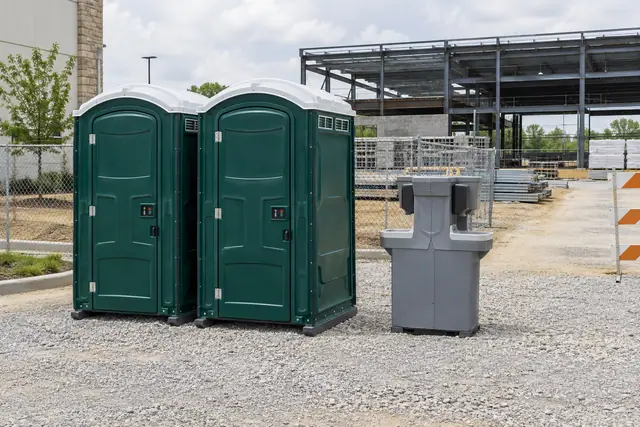
Show the actual boundaries and movements
Mark the proposed cabin, washing area, worker route and service entrance. Identify adjacent public or neighboring space rather than assuming all open ground belongs to the project. The responsible site team and provider should review the actual arrangement.
Look ahead to the next use of the space
A new fence or material stack can remove access even when the equipment has not moved. Explain those planned changes early. If relocation is necessary, arrange it with the provider; do not have an available machine operator move a loaded unit as an informal favor.
Keep door use separate from traffic
Consider where a person stands while entering and leaving. Avoid a route dependent on crossing a busy unloading operation or squeezing between stored materials. Ask the site lead to resolve conflicts rather than treating a visible gap as evidence of a suitable walkway.
Recheck after the layout changes
Include the restroom approach in ordinary site oversight after major deliveries or fencing work. Report instability, damage or an obstructed route to the appropriate contact. That observation is not a technical inspection and does not authorize repairs. Keep final collection access in mind when the site approaches completion.
Questions before you book
Can the cabin stand on an unused public verge?
Do not assume so. Identify ownership and applicable restrictions before proposing public-space placement.
Can the unit remain behind the final fence?
Only if user access, servicing and removal remain workable under the agreed arrangement. Explain the fencing plan before it is installed.